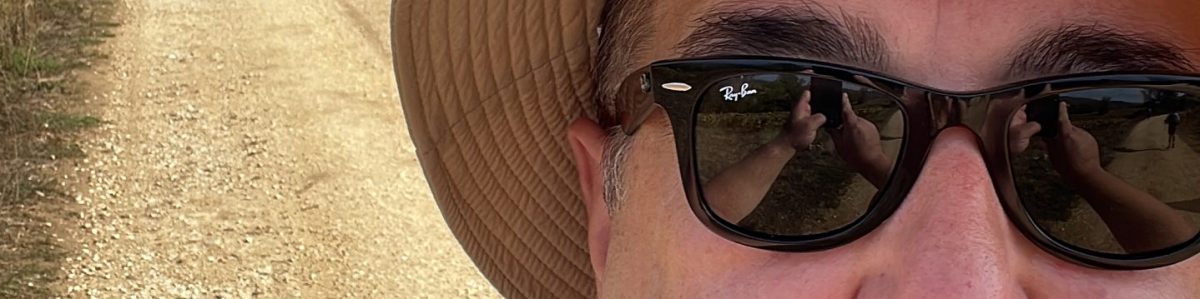
„All those who seek the Lord should rejoice with all their heart“ (Ps 105:3)
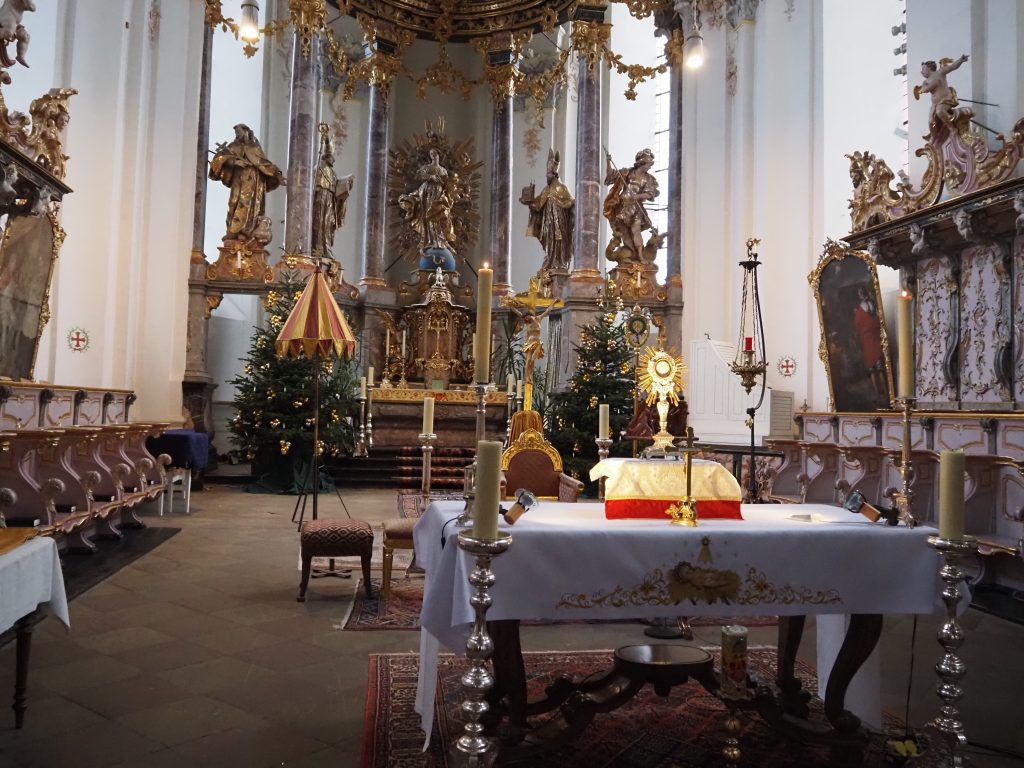
Trier, Paulinkirche 2023 during Eucharistic Adoration (Adoratio)
„The Faith is man's response to God, who reveals himself and gives himself to man, and thus in search of the ultimate meaning of his life, bringing light in abundance.„ (KKC S. 47; 2003)
„That The desire for God is written in the human heart, Because man is created by God and for God. God never stops drawing him to himself. Only in God will man find the truth and happiness that he tirelessly seeks.“ (KKC S. 47; 2003)
„…this intimate and vital connection with God… however, can be forgotten by man…“
Causes: „Bad example of the faithful, anti-religious thought currents, and finally the inclination of the sinful person to hide from the fear of God and to flee from the call of the Lord…“ (KKC S. 48; 2003)
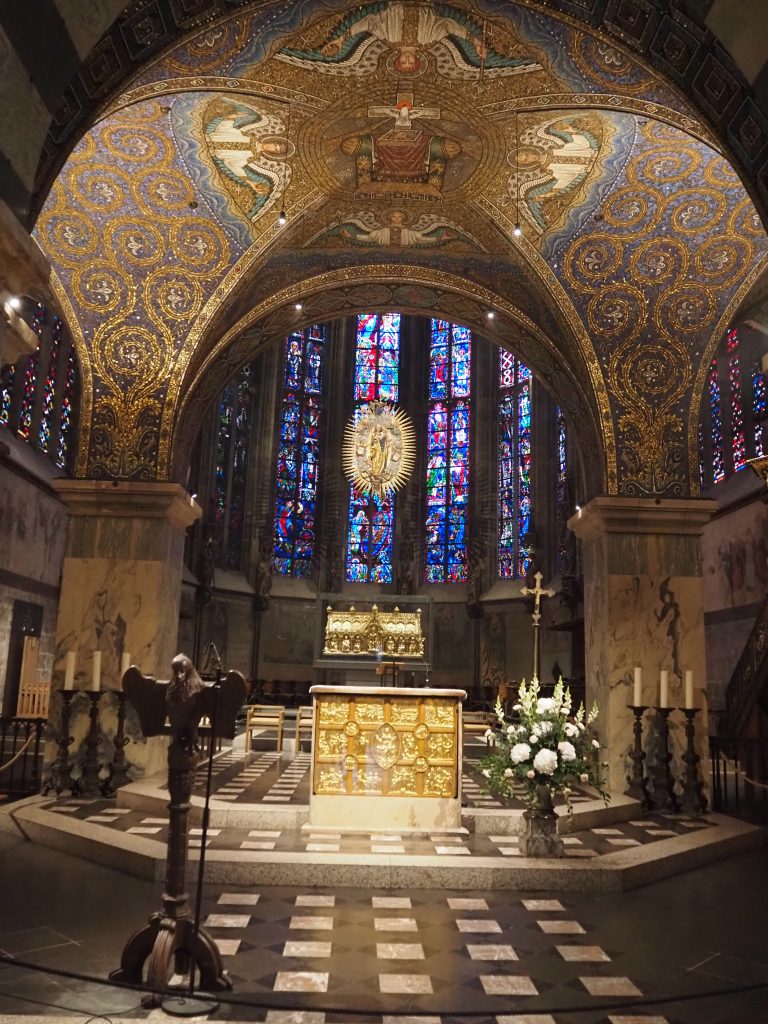
Aachen, Cathedral View of the Altar with the Rayed Crown Madonna & Charles Chapel
Why faith helps me!
Schicksalsschläge und Krankheiten können auch ein Test der eigenen Gottgesinnung sein, als auch die Person in eine tiefe & existenzielle Krise führen. Aus dem tiefen Schrei der Krise heraus, habe ich mich für den noch tieferen Glauben an die Heilige katholische Kirche entschieden. Seitdem suche ich fortan das Gespräch mit Gott.
The turning towards God can but mostly one thing in particular No: Damage!
Angefangen hat es nach meinem ersten Jakobsweg (Camino) von 2008 ab dem Jahr 2014 in Porec mit zunächst sporadischen Kirchengängen und auch kirchlicher Literatur. Das Ergebnis für den heutigen Stand ist eine tiefe Beziehung zu Gott mit dem Meditieren von Kirchenschriften, dem Besuch von einem Gebetskreis als auch dem regelmäßigen Besuch von Gottesdiensten und dem Empfangen aller wichtigen Hl. Sakramente der katholischen Kirche (Buße & Eucharistie).

St. Jerome meditating; Caravaggio, 1605, Montserrat (Wikipedia)
My Path to Faith
„The path to perfection leads through the cross. There is no holiness without renunciation and spiritual struggle. Spiritual progress requires asceticism and mortification, which gradually lead to living in peace and the joy of the beatitudes.“ (KKK 2015; 2003)
The path to faith can be diverse and does not have to be based solely on one’s own inner motivation! Starting with socialization from one’s own childhood, role models in the form of people (e.g., parents, grandparents, priests, etc.) can serve as guiding figures, or Holy People, who are generally seen as role models in the Church, can also have an inspiring effect. Relics or icons, as the foundation of the Church from tradition, can also have a healing effect on one’s own faith!
My personal path to faith through inner motivation began as a teenager when I served as a altar server at St. Wendelinus Church in Zellhausen. When you are a teenager, you are more guided by adult role models and perform faith exercises and are less involved with intellectually high-quality literature on self-reflection. This changes as you grow into adulthood. Of course, I was familiar with holy figures at the time (such as St. Martin or St. Nicholas, among others), but I had no autobiographical connection to them.
This gradually began to change during my religious education classes in my high school years in 1997 (10th grade), when our priest from Seligenstadt (Einhard Basilica), Herr Pfarrer Ludwig, gave us the relic and icon:
The tomb cloth was presented to Turin.
The covered tomb cloth from Turin in its own recording from 2022
Fragment of the Turin Shroud in the form of the head of Jesus depicted on the Shroud (Wikipedia)
The gravestone as the first piece of information in the educational reading by my priest Mr. Ludwig helped me in so many of the initial discussions with people of other views to manifest my position as a Catholic. Moreover, it was also a matter of scientific proof at the time that there is a God (Jesus)!
However, this intellectual attitude did not fully answer the question of what happens to us after death (resurrection).
The burial cloth from Turin serves as a counterpoint in my life (counter-evidence 😉) to other views. To top it all off, there are the biblical scrolls from Qumran from the early Christianity.
…over time:
In 2008 I walked the Way of St. James and did not know that I was journeying to the pilgrimage site in Santiago de Compostela in memory of my namesake, James (Jimmy / James). My own motivation at the time was to process my grief over the loss of my deceased mother (10 / 2007), as well as to distance myself from the new hustle and bustle of home that was now upon me.
Along the way, I had to beg for food and, if necessary, shelter from Switzerland (in Alsace, it could be below 10°C at night).
Presumably the religious people took me in quickly upon my request and gave me something warm to eat, possibly some clothes and a place to stay, and they also made sure I could wash myself, as a boost for the journey that still lay ahead of me!
„For I was hungry and you gave me food; I was thirsty and you gave me drink; I was a stranger and you welcomed me;.“(Matt 25,35 EU)
„Break your bread for the hungry and those in need without a home; lead them into the house! If you see a naked person, clothe him…“(Jer 58,7 EU)
The Camino 2023 around Burgos
Diese großen Gesten der Barmherzigkeit seitens meiner damaligen Gastväter mir ggü., führten mit der Zeit bei mir zu einem großem Einlenken und dann konzentrierter Beschäftigung mit meinem Glauben. War ich noch zum Jakobsweg 2008 ein deutlich historisch angelehnter Christ (das Christentum aus der historischen Machtperspektive), wandelte sich dieses Denken und mein persönliches Handeln mit den Jahren in das echte und pure Christentum nach der Bergpredigt und christlicher Agape!
Jedoch bin ich der Meinung, dass man sich abgrenzen darf und seinen Standpunkt definieren muss!
„Alle, die ihr Leben konsequent nach Gottes Willen in Christus Jesus führen wollen, werden Verfolgung erleiden.“ (2. Tim 3,12 EU)
Papst (Pontifex Maximus) Leo XIV. am Tag seiner Wahl (08. Mai 2025) auf der Loggia des Petersdoms (Wikipedia)
Vorstellung der heiligen Sakramente der katholischen Kirche
Die katholische Kirche verfügt über 7 Sakramente ->
– Taufe
– Firmung
– Eucharistie
– Buße
– Krankensalbung
– Weihe
– Ehe
Die Sakramente sind in der Initiation des Lebens gereiht und verfestigen sich mit den Lebensjahren des Gläubigen im Leben und vor allem Tiefe des eigenen Glaubens (Stärkungen im Laufe des Lebens).
Dabei ist das Sakrament der Sakramente <Die Eucharistie>.
Denn alle anderen Sakramente bauen auf diesem auf oder führen als Ziel zur Eucharistie. (KKK S. 340/341; 2003)
Taufszene aus der ersten Christenzeit in der Calixtus Katakombe Rom (Wikipedia)
Dieses Sakrament wird auch „Bad der Wiedergeburt und der Erneuerung im Heiligen Geist“ genannt.
„… ohne die niemand in das Reich Gottes kommen kann!“ (KKK S. 341; 2003)
„Fähig zum Empfang der Taufe ist jeder und nur der Mensch der noch nicht getauft ist.“ (KKK S. 348; 2003)
„…im Notfall kann jeder sogar ein ungetaufter, die Taufe spenden, falls er die notwendige Absicht hat.“ (KKK S. 349; 2003)
Der Herr selbst sagt, dass die Taufe heilsnotwendig ist. Darum hat er seinen Jüngern den Auftrag gegeben, das Evangelium zu verkünden und alle Völker zu taufen. (KKK S. 350; 2003)
Die Taufgnade ergibt sich durch das Eintauchen in das Wasser was Sinnbild des Todes und der Reinigung aber auch der Wiedergeburt und Erneuerung ist. Die beiden Hauptwirkungen sind die Reinigung von den Sünden und die Wiedergeburt im Heiligen Geist. (KKK S. 351; 2003)
Das Zeichen der Taufe wird durch keine Sünde ausgelöscht und wird nur einmal gespendet und kann somit nicht wiederholt werden. (KKK S. 352; 2003)
„Die Taufe ist das Siegel des ewigen Lebens.“ (KKK S. 354; 2003)
Das Weihwasser in den katholischen Kirchen dient für die Gläubigen zum Bekreuzigen der Stirn mit Weihwasser als Tauferinnerung (unauslöschliche Bund mit Christus) und dem Gelöbnis des inneren Wandels und Umkehr zu Jesus hin. Letzteres kann jedoch nur durch das Sakrament der Buße verrichtet werden.
Weihwasser wird traditionell in der Osternacht für das ganze Jahr gesegnet mit der entsprechenden Formel und Gebet. Dabei wird die Osterkerze teilweise drei Mal in das Taufwasser versenkt, wobei man um das Herabsteigen des Heiligen Geistes bittet! (Quelle: Domradio)
2011, Zagreb Papstbesuch Benedikt XVI. mit dem Lied: „Kraljica neba raduje se“ (Regina Caeli)